
RenewaNews Briefing — September 27, 2026
Sunday, September 27, 2026
Today's briefing brings you 13 stories across battery storage, renewable energy, offshore and solar power from the Global Renewables Market. Leading today: NTPC, EDF Power Solutions India form joint venture for pumped storage; hydro and renewable energy project - timesofindia.indiatimes.com.
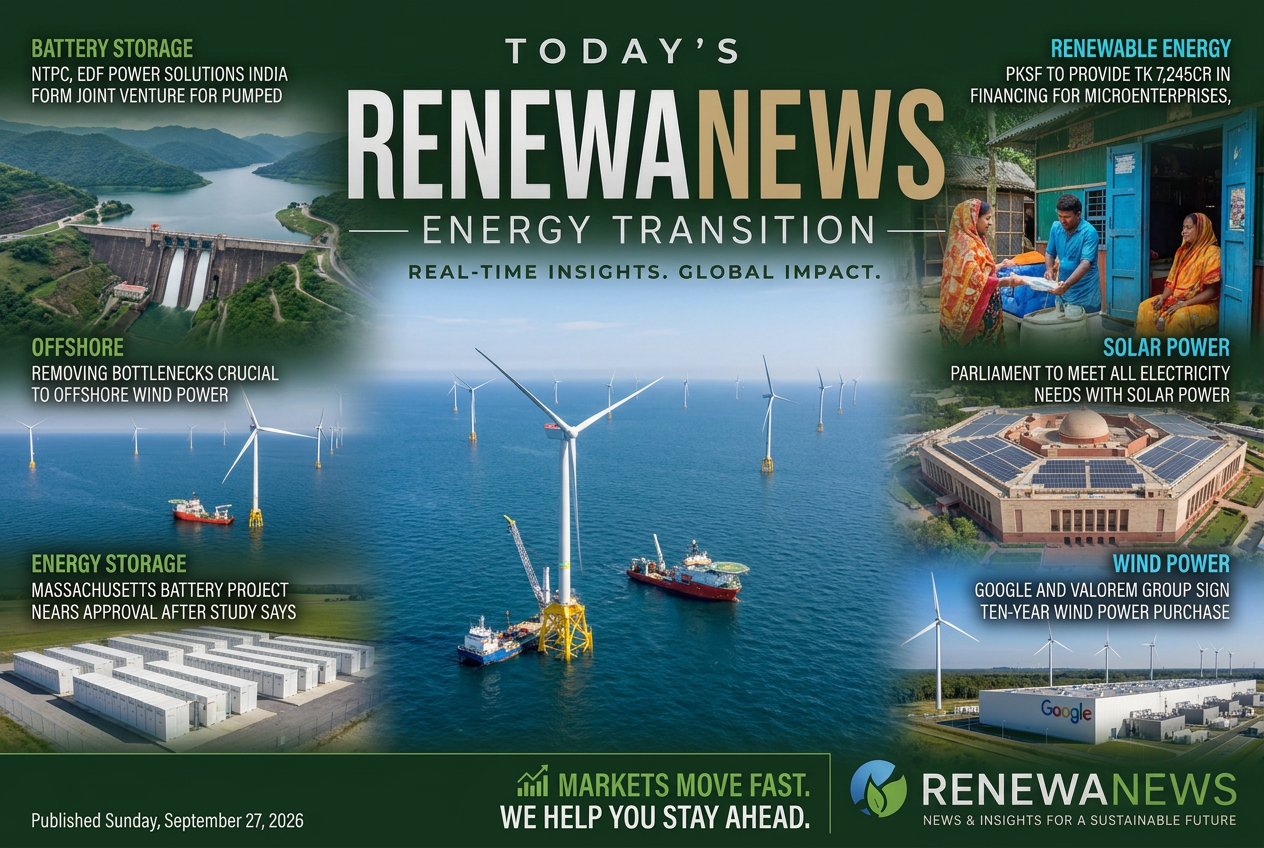
battery-storage
This joint venture links a major Indian utility with a renewable-energy developer to pursue pumped storage and other hydro-linked clean power projects. It points to growing interest in long-duration storage and firmed renewable supply as India adds more variable solar and wind capacity.
timesofindia.indiatimes.com
The project is moving closer to approval after a noise study found it within state limits. That matters because battery storage can add flexible capacity to the grid, but local permitting and siting issues still shape how quickly these projects get built.
The Cool Down
renewable-energy
PKSF’s financing plan points to continued capital support for small businesses alongside distributed solar deployment in Bangladesh. The mix matters because it links local enterprise lending with cleaner power access, which can widen adoption beyond larger grid-connected projects.
Bangladesh Sangbad Sangstha (BSS)
Libya is looking at renewable energy to cover municipal government facilities, which points to a small but practical public-sector use case for cleaner power. If pursued, this kind of procurement could reduce diesel dependence and create a clearer path for distributed solar or other local clean-energy systems in a fuel-constrained market.
Libya Herald
The project appears to pair clean water access with renewable energy deployment, which points to basic infrastructure needs rather than a pure power-market story. It should matter most for local service reliability and for how distributed clean energy is being used to support essential utilities.
The Friday Times
Libya’s renewable energy authority is looking at Egypt’s energy sector as a reference point for renewable power, efficiency, and electricity-sector reform. The story points to regional policy learning rather than a project announcement, but it still matters for how North African markets may shape future clean-energy deployment.
Libya Herald
offshore
Offshore wind developers still need clearer rules and fewer procedural delays before projects can move from planning to construction. The piece points to the same core issue across many markets: policy support alone is not enough if permits, grid access, or other bottlenecks keep capital on the sidelines.
en.qdnd.vn
solar
This story describes a public institution shifting its power supply to solar generation from Konya. It signals another real-world case of solar being used to cover steady electricity demand, which supports cleaner procurement and can reduce exposure to conventional power costs over time.
Hürriyet Daily News
Bangladesh is signaling a push to put solar power directly into government buildings and institutions. That points to a practical route for steady public-sector demand and faster distributed solar adoption, with benefits for power costs and emissions if agencies follow through.
Bangladesh Sangbad Sangstha (BSS)
The story points to friction around a solar project’s on-the-ground execution, with illegal pole installation raising concerns about route selection, permitting, and impacts on roads and waterbodies. For developers and local authorities, it underscores how construction practices can slow projects and create reputational and regulatory risk even before power is delivered.
The Hindu
wind
Google is using a long-term wind power deal to secure clean electricity in Finland. The agreement supports new renewable supply for a large corporate buyer and gives the project backer a clearer revenue base.
Energies Media
clean-energy
Australia is using high-level diplomacy in New Delhi to promote clean-energy cooperation, which points to policy and investment ties rather than a single project announcement. The story matters for future supply chains and cross-border clean-energy trade between two large markets.
South Asian Herald
Residents are weighing a proposed local fee tied to Eugene’s Clean Energy Fund. The story matters for how the city may pay for clean-energy programs and how much cost it places on households and businesses.
KVAL