
ShaleMarkets Briefing — August 16, 2026
Sunday, August 16, 2026
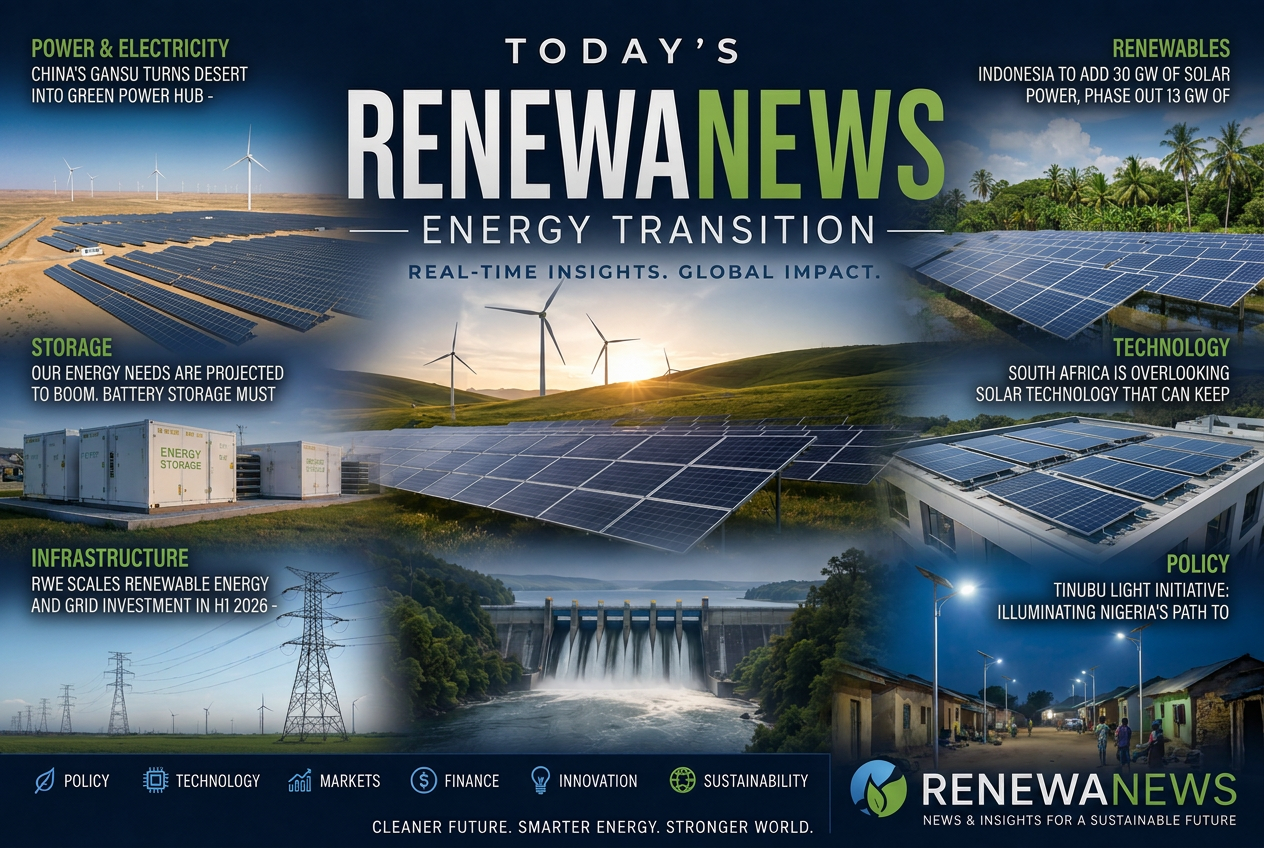
Today's briefing brings you 12 stories across policy, midstream, technology and markets from across North American oil and gas. Leading today: China's Gansu turns desert into green power hub - news.cgtn.com.
Policy
China is using inland land and grid buildout to add renewable supply at scale, which can ease power constraints and reduce reliance on imported fuels. For executives, it signals stronger competition for capital and policy support in low-carbon generation and a potential shift in regional energy demand patterns.
Google Search
This signals a meaningful shift in Indonesia's power mix away from diesel generation toward utility-scale solar, which can reduce fuel imports and reshape power-sector demand for liquid fuels. For energy investors and suppliers, it points to stronger policy support for renewables and weaker long-term economics for diesel-fired assets.
Google Search
Affordable renewable power can improve operating costs and reliability for industrial users in Nigeria, which matters for capital allocation decisions in a market where power availability constrains activity. It also signals policy support for distributed energy that could reshape demand for grid power and backup generation.
Google Search
Trinidad and Tobago’s push into renewables signals a policy shift that could gradually reshape domestic power demand away from gas, with implications for upstream gas consumption and utility investment. For executives, it is a reminder that even gas-rich markets may face slower long-term growth in local fuel demand as clean power gains share.
Google Search
Midstream
Rising power demand signals more spending on grid flexibility and storage, which can shift capital toward batteries and other balancing assets rather than only generation. For oil and gas executives, it underscores how electrification and peak-load management can affect regional power pricing and the pace of industrial demand growth.
Google Search
Utility-scale storage paired with solar reduces the value of peak gas-fired generation and can shift future capital away from simple-cycle capacity toward batteries and transmission. For executives, it signals that grid flexibility is becoming a competitive factor in power markets and a potential headwind for fuel demand during evening peaks.
Google Search
Technology
South African power buyers and policymakers are being pushed to think beyond daytime solar and toward dispatchable clean capacity that can support the grid after sunset. For utilities and developers, that shifts capital toward storage, hybrid systems, and other technologies that can compete more directly with firm generation.
Google Search
Markets
RWE’s spending pattern signals that European utilities are still directing capital toward renewables and grid assets rather than upstream hydrocarbons. For executives, that reinforces competitive pressure for power-sector infrastructure and a continued shift in capital allocation toward electrification and energy transition assets.
Google Search
Tomago’s demand matters because it can anchor electricity and infrastructure investment around a large industrial load, which improves the economics for new generation and grid buildout. For executives, it signals that NSW’s power market may see capital follow firm demand rather than wait for a fully resolved renewables rollout.
Google Search
The lending signals continued capital support for European renewables, which can influence where utilities and developers direct new projects and partnerships. For oil and gas executives, it is a reminder that competing capital is still flowing into power generation assets that can displace some future fuel demand in the region.
Google Search
Regulatory
China moving faster on renewable-energy recycling rules signals a growing push to manage end-of-life solar, wind, and battery assets as the buildout matures. For executives, it points to rising compliance costs and a developing service market around decommissioning, materials recovery, and supply-chain control.
Google Search
The dispute signals that siting decisions for renewable projects can still become a material permitting and social-license risk, even when the asset is relatively small. For executives, that means local opposition can delay capital deployment and force developers to reassess land strategy and stakeholder engagement before committing to construction.
Google Search