
RenewaNews Briefing — August 18, 2026
Tuesday, August 18, 2026
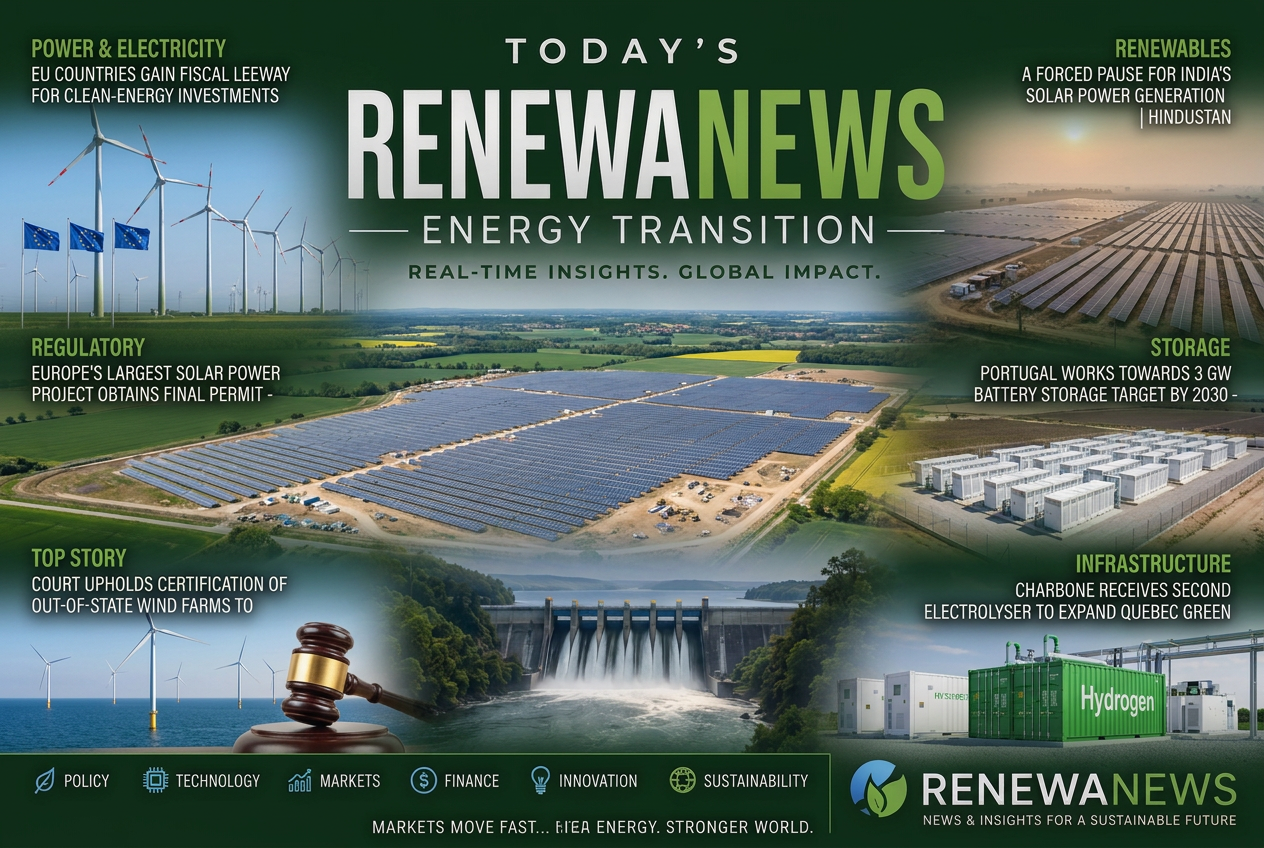
Today's briefing brings you 27 stories across policy, regulatory, midstream and markets from the Global Renewables Market. Leading today: EU countries gain fiscal leeway for clean-energy investments through 2028 - MLex.
Policy
This matters because easier fiscal treatment for clean-energy spending can shift how European utilities, developers, and industrials allocate capital between renewables and conventional energy assets. It also signals a policy backdrop that may support project pipelines and improve the competitive position of low-carbon investments across Europe.
MLex
A slowdown in India’s solar buildout signals potential near-term shifts in power procurement and project financing, which can affect competition between renewables and gas-fired generation. For an energy executive, it is a reminder that policy, grid constraints, and capital discipline can reset demand expectations in one of the fastest-growing power markets.
hindustantimes.com
A large solar buildout in Iran signals continued state-backed investment in domestic power supply and a stronger push into renewables despite sanctions and capital constraints. For executives, it matters because it can affect regional power demand, equipment sourcing, and the competitive position of gas-fired generation in the market.
WANA News Agency
Variable renewable output can force the grid operator to spend more on balancing resources, backup generation, and network upgrades, which affects capital allocation across the power system. For executives, it is a signal that Kenya’s electricity market may face reliability and revenue pressures as renewable penetration rises.
African Energy
This signals a policy push to attract clean energy manufacturing, which can redirect capital toward renewable supply chains and supporting industrial infrastructure. For executives, it matters because state-level incentives and siting priorities can change where new power and manufacturing demand concentrate.
Deccan Chronicle
This matters because transmission buildout is a key constraint on power demand growth, renewable interconnection, and the pace of load-serving investment across the U.S. For energy executives, the setback suggests slower grid expansion and a more fragmented path for new generation and large industrial power loads.
The Cool Down
Malta’s move toward another renewable auction signals continued procurement support for clean power rather than a pause in policy, which matters for developers deciding where to deploy capital in a small but price-sensitive market. For executives, it also points to sustained competition for project slots and a clearer path for local power mix diversification.
pv magazine Global
Jordan’s push to highlight a green agenda ahead of a China visit suggests the government is still looking for foreign capital and technology to build out power and clean-energy projects. For oil and gas executives, it signals where regional investment priorities are shifting and where competition for infrastructure and generation contracts may intensify.
AGBI
Regulatory
This signals another large-scale renewable buildout in Europe that can influence power supply, land use, and permitting competition for capital across the region. For an executive, it is a reminder that utility-scale solar remains a priority allocation target and a factor in long-term demand growth for flexible gas-fired generation and grid infrastructure.
Balkan Green Energy News
The ruling reduces the risk that Ohio utilities and buyers will be cut off from imported wind power, which matters for long-term power procurement and renewable buildout economics. It also signals that state-level market access for out-of-state generation remains defensible, supporting cross-border competition for clean power supply.
Court News Ohio (.gov)
A 10-year offtake for renewable methane signals that industrial gas buyers are willing to lock in long-term volumes from low-carbon molecule projects, which can support project financing and future buildout. For executives, it is another sign that emissions-linked gas substitutes are starting to influence capital allocation and competitive positioning in Europe.
gasworld
Midstream
Portugal’s storage buildout signals stronger demand for grid-balancing assets as renewables penetration rises, which can influence capital allocation toward batteries, interconnection, and flexibility services. For power and gas executives, it points to a market that may rely less on peaking generation and more on storage to manage volatility and security of supply.
pv magazine Global
The start-up of a large battery storage asset in Germany signals continued capital moving into grid flexibility and renewable integration rather than conventional generation. For executives, it is a marker that storage is becoming a competitive infrastructure layer in Europe’s power market, with implications for balancing, merchant returns, and future project pipelines.
TaiyangNews
The deal shows that low-carbon fuels are moving from pilot projects into contracted demand, which matters for capital allocation decisions across hydrogen and e-fuels. For an executive, it signals that road-transport buyers are willing to back alternative molecules where policy support and supply reliability can underwrite offtake.
Hydrogen Insight
Vietnam’s power and fuel policy matters because it signals where future electricity demand, LNG imports, renewable buildout, and grid investment could shift in Southeast Asia. For executives, it is a read on whether capital will be steered toward cleaner generation and infrastructure or toward a slower transition that preserves more fossil-fuel demand.
Asia
Battery storage points to a growing need for flexible power supply that can absorb more renewables and help balance demand spikes. For executives, it signals where capital may shift as grid reliability and dispatchable capacity become more valuable than incremental generation alone.
Renewable Watch Magazine
This signals a move by an upstream-adjacent fuel and logistics player into lower-carbon feedstocks, which can create new demand channels for waste-based renewable fuels. For executives, it points to competitive positioning around emissions reduction and optionality in fuel supply rather than traditional hydrocarbon growth.
vir.com.vn
Markets
Adding a second electrolyser signals continued capital commitment to a low-carbon hydrogen buildout, which matters because it can shift regional power and industrial demand while testing whether green hydrogen projects are moving from pilot scale to repeatable deployment. For executives, it is a read-through on how quickly renewable hydrogen can become a competitive supply option in Canada and where future infrastructure spending may follow.
gasworld
A large Nordic renewable pipeline signals where capital is being steered in Europe, with implications for grid buildout, storage demand, and long-cycle competition for development sites. For operators and investors, it points to continued emphasis on power assets rather than upstream oil and gas exposure.
Solarbytes
This signals continued capital flowing into utility-scale solar and storage in Asia-Pacific, where developers are pairing generation with batteries to improve grid reliability and project economics. For an oil and gas executive, it matters because it reinforces competitive pressure on power markets and on the long-term demand mix in fast-growing Asian load centers.
renewablesnow.com
This signals growing institutional attention to Indigenous-led clean energy projects, which can affect permitting, community acceptance, and partnership strategies for operators and power developers. For executives, it is a reminder that capital allocation in Canada is increasingly shaped by local ownership and social license alongside project economics.
Concordia University
This signals that corporate buyers and industrial users are still willing to back renewable power assets, which can affect how capital is allocated across generation portfolios and long-term electricity supply contracts. For an executive, it is a reminder that decarbonization projects can shape competitive positioning and customer relationships even outside the core oil and gas value chain.
Manufacturers' Monthly
Technology
It signals that electrolyzer sourcing is becoming a cost and supply-chain decision, not just a regional policy choice, which can reshape where green hydrogen capital flows and which manufacturers win projects. For executives, it highlights competitive pressure on domestic equipment makers and the risk that procurement will follow price and localization rules rather than technology origin.
Hydrogen Insight
Egypt’s first battery storage assembly plant points to growing local content efforts in the power equipment supply chain and a push to capture more value from renewable infrastructure spending. For an industry executive, it signals where procurement, manufacturing, and project development may increasingly intersect in the Middle East.
Renewables Now
Vancouver’s clean-energy buildout matters because it signals where utility, municipal, and private capital is being directed, and whether local demand is creating durable supply chains or relying on imported equipment. For oil and gas executives, that affects competitive positioning in power, carbon reduction, and industrial services as decarbonization spending shifts across the region.
theenergymix.com
This signals continued capital and technology investment in electrolyzer supply chains, which matters for how quickly green hydrogen can scale and where industrial partnerships may concentrate. For energy executives, it is a reminder that decarbonization spending is still flowing into equipment, manufacturing, and project enablement rather than only into upstream hydrocarbons.
SolarQuarter
The item suggests clean-energy investment is creating adjacent demand in manufacturing, project development, and service segments, which can reshape where capital flows across the power and industrial supply chain. For executives, that is a signal to track which parts of the value chain are attracting funding and where competitive pressure may build outside traditional hydrocarbons.
Mercomindia.com