
Local-Content Rules Are Back, But Governments Are Building In Exit Ramps This Time
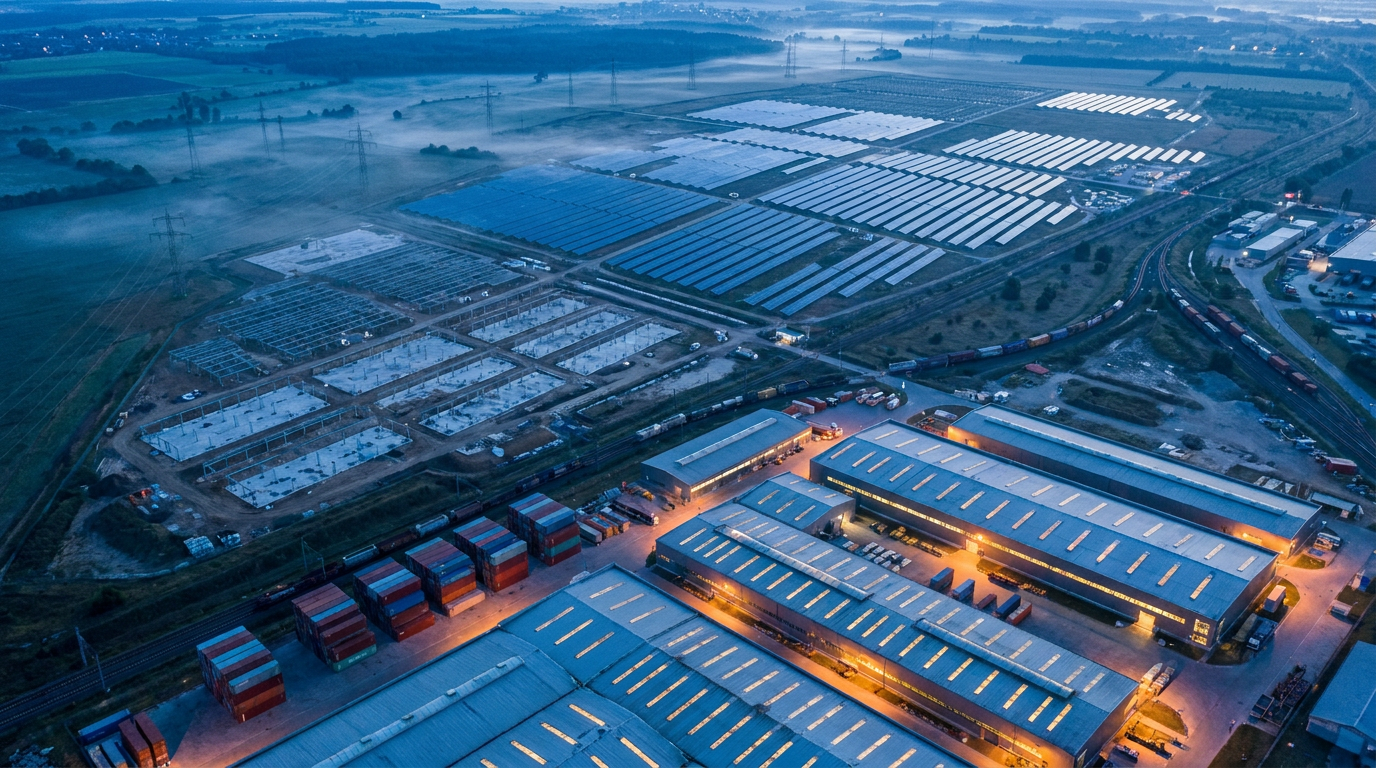
Original illustration created for RenewaNews.

Local-Content Rules Are Back, But Governments Are Building In Exit Ramps This Time
India's renewable energy ministry issued an office memorandum on August 4, 2026, establishing what it called a "limited window" exempting projects with bid submission deadlines on or before August 31, 2025, from mandatory cell-level sourcing under the Approved List of Models and Manufacturers, List-II. Vyqon reported the memorandum on August 13, 2026, and is the only outlet that has published its contents. The exemption date sits oddly against the memorandum's own date: a carve-out for bids submitted nearly a year earlier raises the question of whether the August 2026 document created the window or restated one already in place. No earlier memorandum establishing the exemption was available for review, so that chronology remains unresolved.
That carve-out points to a pattern visible across three Asian solar markets. Governments in India, Pakistan and Malaysia have rewritten local-content and market-access rules over the past two years, and the rewrites share a direction: away from mandates that took effect immediately, toward phased or conditional requirements timed to actual domestic supply.
India: two lists, two speeds
India runs its solar localization policy through the ALMM system, which restricts government-assisted and open-access projects to approved domestic suppliers. List-I covers modules; the most recent update, published by the Ministry of New and Renewable Energy on August 3, 2026, mandates that only listed domestic module manufacturers can supply those projects. List-II covers cells, a tier of the supply chain where India's manufacturing base is thinner.
The ministry has updated List-I repeatedly rather than freezing it, an approach that lets qualified capacity enter the approved pool as it comes online instead of locking in a static roster. The List-II exemption window for pre-August 2025 bids does the opposite job: it protects projects that were priced and financed before cell-level mandates existed from being stranded by a rule that arrived after the fact.
India has applied the same logic further upstream. The government approved a two-year extension for commissioning deadlines under its Production Linked Incentive scheme for solar manufacturing in September 2025, a decision by the empowered group of secretaries covering firms including Reliance New Energy, Tata Power Solar and Adani Infrastructure, according to Prop News Time's September 30, 2025 account, the only outlet to have reported the extension's company-level detail. The extension responded to delays in sourcing capital goods for wafer and polysilicon lines, the two segments where India has essentially no domestic base to draw on.
MNRE is now weighing a separate incentive scheme aimed at more than 10 GW of domestic polysilicon capacity, PV Tech reported on August 7, 2026. Polysilicon is the most upstream link in the chain and the one earlier local-content rules could not reach, because there was no raw-material capacity in the country to protect. A PLI scheme built specifically for that gap amounts to an admission that content rules further downstream, on modules and cells, cannot substitute for building the feedstock industry directly.
Pakistan: assembly first, integration later
Pakistan's approach has moved from a single tax break toward a graduated roadmap. The Special Investment Facilitation Council finalized a Solar Panel and Allied Equipment Manufacturing Policy in 2024 with a 10-year tax holiday and duty-free import of machinery for local assembly, Business Recorder reported on April 20, 2024, framing the policy as an attempt to cut into the country's roughly $770 million annual solar import bill.
A draft policy dated November 4, 2025 sets that ambition on a longer timeline. It targets 80% domestic manufacturing by 2035, but splits the path into phases: Phase I, running 2026 to 2030, covers assembly and ancillary components such as EVA sheets and backsheets, while vertical integration into polysilicon and wafers is pushed to Phase III, from 2032 to 2035. Units built inside Special Economic Zones get a 10-year income tax break under the draft.
The contrast with the country's earlier posture is the point. A flat local-content mandate imposed on a market with no cell or wafer capacity forces developers to either pay a premium for compliant equipment that doesn't exist yet or delay financial close. Pakistan's 2025 draft instead assigns the easiest work — assembly, EVA, backsheets — to the near term, and defers the parts of the supply chain requiring capital-intensive plants that take years to permit and build.
Malaysia: from export ban to commercial workability
Malaysia took the opposite route first. The government banned renewable energy exports in 2021, according to Eco-Business's account of the reversal, before lifting the ban in May 2023. Economy Minister Rafizi Ramli's announcement, covered by Eco-Business on May 10, 2023, let Malaysian developers build capacity at larger scale by selling into Singapore's demand rather than being confined to a domestic market too small to support scale projects.
Malaysia's Corporate Renewable Energy Supply Scheme built on that reversal. Guidelines governing CRESS, issued by the Energy Commission and effective September 20, 2024, let corporate buyers contract directly with generators for renewable supply rather than routing every transaction through the earlier export restrictions the government had just unwound. The commission issued a third edition of those guidelines on June 3, 2026, a revision RDS Partnership described as a shift toward commercial workability. The direction of that edit matches what India and Pakistan have done with their own rules over the same stretch: loosen scheme mechanics rather than tighten them, and let market mechanics catch up to policy intent instead of the other way around.
Sources
This article was reported from the following sources.
MNRE Codifies ALMM List-II Compliance Windows: Final Exemption Timelines Set for Solar Cells — Vyqon, 2026-08-13
Updated (03.08.2026) List-I under ALMM order for Solar PV Modules — Ministry of New and Renewable Energy (MNRE), India, 2026-08-19
Energy Commission Issues The Third Edition Of CRESS Guidelines: A Shift Towards Commercial Workability — RDS Partnership, 2026-06-03
Pakistan Solar Panels & Allied Equipment Manufacturing Policy 2026-2035 — Scribd (Policy Draft), 2025-11-04
MNRE weighs support scheme for polysilicon to back 10 GW capacity — PV Tech, 2026-08-07
PLI solar projects get 2-year extension for commissioning deadlines — Prop News Time, 2025-09-30
Guidelines For The Corporate Renewable Energy Supply Scheme Effective 20 September 2024 — Suruhanjaya Tenaga (Energy Commission of Malaysia), 2024-09-20
10-year solar panel manufacturing policy finalised — Business Recorder, 2024-04-20
Malaysia lifts renewable energy export ban, move welcomed in Singapore — Eco-Business, 2023-05-10